Wednesday, November 16, 2011

A Dodger, a Tiger, a Dazzy and a Senator - Pitching's Triple Crown


Now, this is the rare post I’ll write where the information provided is not just potential news to the reader, but to me as well. It’s true, there seem to be statistics and analysis for everything in baseball these days (how many of you can define WAR, BABIP, or FIP?), and I of course knew that the offensive Triple Crown existed. However, I had never realized that baseball awards the same trophy in pitching, and it is far more commonly distributed.

The original Triple Crown is an award given to hitters dominant enough to lead their respective league (American or National) in batting average, home runs, and RBI. This is a feat so rare that the last winner was, well, crowned in 1967. Left fielder Carl Yastrzemski took the honor, notching 44 home runs, 121 RBI, and a .326 average while playing for the Boston Red Sox. The last National League winner was Joe Medwick, another leftfield slugger who played for the St. Louis Cardinals, achieving the feat in 1937 with a .374 average, 31 homers, and 154 RBI. Some say that the increased focus on dominant pitching means we may not see another offensive Triple Crown winner for years.
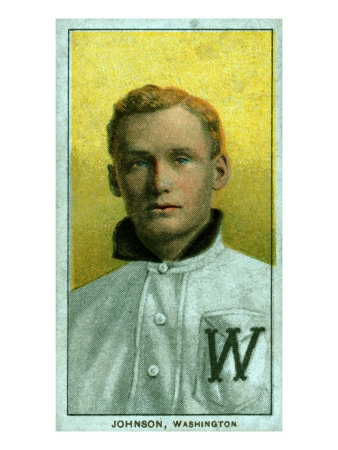
Walter Johnson

Enter the pitching side of the game. While there have only been 16 batting Triple Crowns awarded (with Rogers Hornsby and Ted Williams each winning a pair), there have been a staggering 38 pitching Triple Crowns distributed. Even more impressive are the number of repeat winners: seven have won it at least twice, while Walter Johnson, Sandy Koufax, and Grover Cleveland Alexander each managed to win three, with Koufax winning it in consecutive seasons in 1965-66.
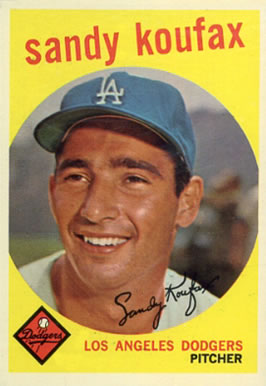
2011 is a milestone in itself, as it is the first season since 1924 to have two pitching Triple Crown winners in the same season: Justin Verlander of the Detroit Tigers (2.40 ERA, 24 W, 250 K) and Clayton Kershaw of the Los Angeles Dodgers (2.28 ERA, 21 W, 248 K). The ’24 winners were Walter Johnson of the AL’s Washington Senators (2.72 ERA, 23 W, 158 K) and Dazzy Vance of the NL’s Brooklyn Robins (2.16 ERA, 28 W, 262 K).

Statistically, there is plenty to dive into here. While there have been 38 Triple Crowns awarded to pitchers, only ten have occurred since 1972—one would be wise to remember at this juncture that the pitcher’s mound was lowered from fifteen inches to ten in 1969 to foster a more offensively-oriented game. However, the split between AL and NL pitchers is even at five wins during that time, showing that there was likely no advantage pitching-wise in either league. Dwight Gooden’s win in 1985 was the lowest qualifying ERA (1.53) since Walter Johnson’s 1.27 mark in 1918, still with the Washington Senators.
Justin Verlander

However, the dominance displayed by Justin Verlander since his first full season in 2006 is almost unprecedented since the dawn of the new century. Randy Johnson was the last pitcher to notch 24 wins, achieving this in 2002 with the Arizona Diamondbacks. His two seasons of at least 250 strikeouts have yet to be matched by any other AL pitcher this decade. He has finished in the top five in Cy Young voting at least three times (including his win this year), won the 2006 AL Rookie of the Year award, and appeared in four All-Star games—did I mention he’s only been pitching full-time since 2006?

Clayton Kershaw
Clayton Kershaw’s 2011 accomplishments in the National League are no less impressive. His 248 strikeouts led the next-best pitcher (Cliff Lee, Phillies, 238) by ten. He was tied with Diamondbacks pitcher Ian Kennedy for wins at 21, while his 2.28 ERA was lower than the next closest (Roy Halladay, Phillies, 2.35) by seven points. No NL pitcher allowed less hits (174), while only five pitchers allowed less than Kershaw’s 54 walks. Only two NL pitchers threw more innings than Clayton’s 233.1, showing that not only did he assert dominance over the course of a season, but did so while surely battling a high level of fatigue. Justin Verlander, by comparison, threw a staggering 251 innings, leading the AL in innings pitched.

There is much debate since the dawn of the steroid era as to whether baseball will ever see a focus on the pitcher, whether we will ever witness another season like 1968, dubbed the Year of the Pitcher (Yastrzemski was the ONLY batter to crest a .300 average in the American League). The MLB-wide batting average was .231, an all-time low. Two pitchers reached sub-2.00 ERAs, with Bob Gibson achieving an as-yet-unmatched (and as-yet-incomprehensible!) 1.12 ERA. However, with the numbers put out by Kershaw and Verlander this season—perhaps set forth by greater enforcement and paranoia regarding steroid use—we may be returning to a more defensively-minded game. As a guy who loves pitching, I am one blogger who certainly hopes so.

Wednesday, August 24, 2011

Prime Time and Tecmo: Baseball's Two-Sport Stars

"The hardest thing to do in baseball is to hit a round baseball with a round bat, squarely." - Ted Williams

"Football is like life - it requires perseverance, self-denial, hard work, sacrifice, dedication and respect for authority" - Vince Lombardi

Deion Sanders and Bo Jackson managed multi-year careers in two of America's most popular sports, and were stars on both fields of play. The move is certainly not unheard of. Many of today's professional baseball players were also stars in other sports on the collegiate level, including Chicago Cubs reliever Jeff Samardzija (WR at Notre Dame) and San Francisco Giants utility player Mark DeRosa (QB at UPenn). Former outfielder Brian Jordan (Cardinals, Braves, Dodgers, Rangers) even had a career as a defensive back in the NFL, playing with the Atlanta Falcons from 1989-1991.

However, few had the immediate impact and success in both sports that were shared by Sanders and Jackson. 

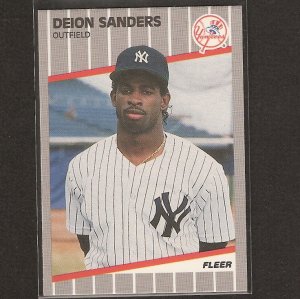
Deion, in his rookie season in the Bronx.
Deion earned himself the nickname "Prime Time" for his flashy play and boisterous personality as a cornerback (1989-2005) for the 49ers, Cowboys, Falcons, Redskins, and Ravens, as well as an outfielder (1989-2001) for the Braves, Yankees, Reds, and Giants. Apart from a recent induction into the NFL Hall of Fame, two Super Bowl rings, 53 interceptions and 22 touchdowns, Sanders notched 558 hits, 186 steals, and a .263 batting average.
As if his speed hadn't been proven enough on the gridiron, Sanders led the National League with fourteen triples in 1992 as a member of the Atlanta Braves. His baseball numbers will never land him in Cooperstown, but his persona will never be forgotten. He is currently working with the NFL Network as an analyst, and is the star of his own reality show (Deion & Pilar: Prime Time Love) on the Oxygen channel. Also, while he may wish I didn't mention his musical career, Deion Sanders released a rap album in 1994 titled (what else?) Prime Time which was followed by a remix album The Encore Remix in 2005. Hey, you can't be an all-star everywhere, right?

"Tecmo" Bo Jackson earned himself the nickname thanks to an old NES video game Tecmo Bowl, in which he was programmed to be hands-down the most effective running back--and overall player--in the game. Jackson won the Heisman trophy as a member of the Auburn Tigers in 1985, and played his entire NFL career as a member of the Los Angeles Raiders from 1987-1990. Unlike Sanders, Jackson's career was much more successful on the diamond. Jackson broke into the majors as a member of the Kansas City Royals in 1986, where he stayed until 1990, before taking his talents to the Chicago White Sox from 1991-1993, and playing his final game in the strike-shortened 1994 season as a member of the California Angels. He was the All-Star Game MVP in 1989 (on the strength of a season in which he finished with 32 home runs, 105 RBI, and 26 steals, finishing 10th in MVP voting) and won the 1993 Comeback Player of the Year award in 1993. He finished his baseball career with 141 home runs, 415 RBI, a .250 batting average, and his trademark act of breaking the bat over his knee after a particularly frustrating strikeout. Arguably, Jackson's non-playing persona was bigger than his on the field. Nike's "Bo Knows" ad campaign capitalized on his freakish athletic ability, while he personally endorsed the NES game Bo Jackson Baseball and Gameboy game Bo Jackson's Hit & Run, which combined both sports into one game. He was also an unlockable character in the 2004 multi-console game NFL Street, as a member of the "Gridiron Legends." A showcase of the "Tecmo Bo" character can be seen below, courtesy of YouTube:


There is frequently talk of "the next Prime Time," or "the next Tecmo Bo," with athletes such as NFL tight end Tony Gonzalez trying out with the Miami Heat, and--of course--Michael Jordan's brief flirtation with professional baseball as a member of the Chicago White Sox minor league organization. However, if anyone manages to break into the professional realm in more than one sport, they will likely always be in the shadow of Tecmo and Prime Time, the standard bearers for diverse athleticism.

Tuesday, May 17, 2011

His Last Hammer

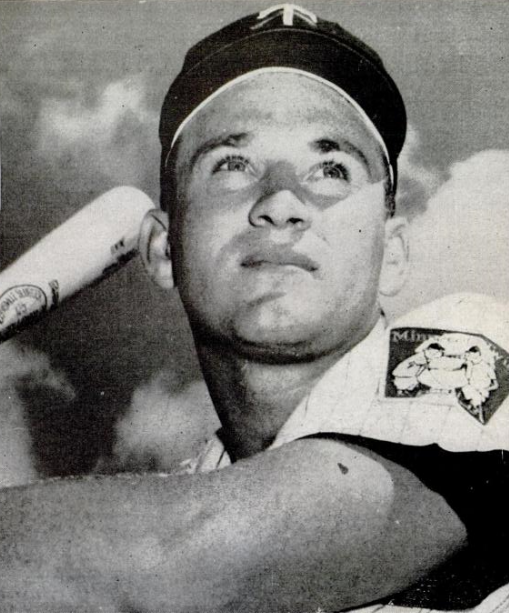
Harmon Killebrew in 1963.
Harmon Killebrew died today. The Killer, Hammerin' Harmon, one of the most well-known Minnesota Twins players, drew his final breath and succumbed to a case of esophageal cancer that the doctors told him was no longer treatable. He announced last Friday that he was to enter hospice care, stating that "it is with profound sadness that I share with you that my continued battle with esophageal cancer is coming to an end."

For a guy known for gritty, hard-nosed play, these could not have been easy words to say. He never won a championship, but left a legacy of play that earned him a Hall of Fame induction in 1984 with a staggering eighty-three percent of the vote. Upon his retirement in 1975, his 573 home runs were fifth all-time, and thirty-six years later, he has dropped only to eleventh. He retired with a .256 average and an .885 OPS, along with 1,584 RBI and 2,086 hits. He was voted to an amazing thirteen All-Star teams, won the American League Most Valuable Player award in 1969, and had his #3 retired by the Minnesota Twins in 1975.

Perhaps his most admirable honor, however, was earning the Lou Gehrig Memorial Award in 1971, an honor given to those who best portray Gehrig's exemplary integrity and character, both on and off the field. Since its creation in 1955, it has been awarded to such legends as Lou Brock, Hank Aaron, and Cal Ripken, Jr. See, if anyone remembers Killebrew for anything, it's being an all-around great guy. Playing in an era of hard-partiers like Mickey Mantle, Killebrew responded to a 1963 Sports Illustrated interview question of what he likes to do for fun with, "Well, I like to wash dishes, I guess."

Killebrew hit the longest measured home runs at Minnesota's Metropolitan Stadium (520 feet) and Baltimore's Memorial Stadium (471 feet), and was one of only four players to hit a home run over the left field roof of Tiger Stadium. His legacy is one of power, unassuming nature, and approachability. "Hammerin'" Harmon Killebrew was 74 years old.

Monday, April 11, 2011

Origin Story


So, a lot of people have asked me about the origins of this blog since it started. Sure, “I'm doing it for class” is an accurate answer, but it's not the full answer, and it seems a little reductive. The implication is there that these weekly blogs are the only time I care enough about baseball to write about it, to talk about it, or to remember it. Anyone who knows me knows that this isn't the case. Baseball and music are my biggest passions in life, and I can't imagine my life without either of them.

So, why the name “Common Cards” when the blog has transformed into something beyond mere players? Well, the answer is found in that it was never supposed to transform into something beyond mere players. This was supposed to be a chance for me to remember some of my favorite players from my early days as a baseball fan, a chance to rehash great stories from their past, and a chance to remind baseball fans that baseball really is a team sport. Sure, having a guy like Albert Pujols or Hanley Ramirez on your team is going to help your chances, but it won't be enough to win a World Series. You need those role players.

Like the blog? You have this guy to thank.
Where did the name originate? Well, I have my friend Dave to thank for this. Being the giant baseball obsessives that we are, we would spend the time between baseball seasons (or even between games...especially during the All-Star Break) trying to remember the names of the more obscure players. Once we would shake the rust from whatever lobe of our brain is being used for something like this, we'd move it into minor league guys. (I'm telling you, we're obsessed.) The names we came up with were phenomenal: Delino DeShields, Oil Can Boyd, Mickey Morandini, Gus Triandos. They were the guys you'd trade away to get the Mark McGwire rookie card, or the last card in your 1997 Topps set. (Ironically, you always needed a guy like Matt Williams or Glenallen Hill for something like that.)

Cubs fans remember him for all the wrong reasons.
Card collectors know what those cards are called: Common Cards. Like the name implies, guys like this would populate the majority of the individual packs you'd be spending your allowance or paper route or lemonade stand money on. Sure, every once in a while you'd uncover a gem, (Johnny Damon rookie card, Hank Aaron reprint, Cal Ripken 2131 memoriam) but most of these were going to be the forgotten players. Hee Seop Choi, Bobby Bonilla, Dale Sveum...I have these guys to thank for the basis of this blog, even if me and their families are the only ones who remembers who they are. It's my hope that I'll have the motivation to continue this blog once I finish the class and graduate. Someone needs to remind the world that Milton Bradley didn't just make board games, Coco Crisp isn't just a cereal, and Bobby Hill isn't just a cartoon character. I think I'm the man for the job.

Monday, April 4, 2011

AL Preview


So, here's part two. It was a little tougher to write this one objectively, since I had the first three games of the 2011 season to work against, but always remember, they play 162 for a reason. Without further ado, my AL and playoff predictions. Enjoy!

AL EAST (WINNER: Boston Red Sox)
ORDER OF FINISH
  1. Boston Red Sox
  • This has the makings of a team that goes deep into the playoffs. The additions of Carl Crawford and Adrian Gonzalez boost an already powerful lineup, though they will have to cover for a shaky rotation. Daisuke Matsuzaka seems to be terrified of throwing strikes, while Josh Beckett hopes to improve on a pretty disastrous 6-6, 5.78 ERA season in 2010 after spending much of May-July on the disabled list. Jonathan Papelbon is also a major question mark in the closer's role, and may be Riverdancing on another roster if the final year of his contract is another near-4 ERA year. Still, if A-Gone and Crawford bring in the advertised offense, the pitching may not matter. This is a team with a hell of a lot of potential, and too much upside not to put at number one.
  1. New York Yankees
  • A weak AL East is what puts them in second, and nothing more. They have talented players, but they're only getting older. Derek Jeter is almost 37, A-Rod almost 36, and Mariano Rivera is 41. AJ Burnett is coming off a miserable 10-15 season in 2010 in which his 5.26 ERA was more bloated than a Bronx cabbie. The younger guys have to contribute (Brett Gardner and Robinson Cano, for instance) for this team to battle. Still the “maybes” and “if-then's” are too high. This team finishes second in the division, but misses the playoffs for the second time in four years.
  1. Baltimore Orioles
  • Signing Vlad Guerrero was a huge boon for this team, and Derrek Lee at 1B will provide plenty of veteran leadership. The acquisitions of JJ Hardy and Brendan Harris may not be sexy pickups, but they'll provide pop where necessary. A healthy Brian Roberts at 2B will help this team greatly, and the young guys like Adam Jones and Luke Scott will be exciting to watch. Pitching, as usual, is this team's big weakness, and will keep the Orioles out of contention until they can sign some major arms. Still, there are steps in the right direction.
  1. Tampa Bay Rays
  • A year after an AL East crown, the Rays will be battling simply to avoid a losing record. The losses of Matt Garza, Carl Crawford and Carlos Peña hurt this squad massively, and the addition of Kyle Farnsworth to the bullpen is major subtraction by addition. The nail in the casket was the loss of closer Rafael Soriano to the rival Yankees. While many of these moves came with minor league prospects, none will come with immediate return. Rebuilding year.
  1. Toronto Blue Jays
  • Thank God for Jose Bautista. However, do not expect him to hit 54 home runs in 2011. This season will prove that the 2010 season, with an 85-77 finish, was a definite fluke. There are too many holes, too many bad players, and too little John Buck for this team to go anywhere but down. There are some bright spots (expect Rajai Davis to be a steals machine), but anything other than the cellar is an order taller than newly acquired closer Jon Rauch's 6'11” frame.

AL CENTRAL (WINNER: Chicago White Sox)
Order of Finish
  1. Chicago White Sox
  • Adam Dunn will bring immediate return, and the first big bat they've had to supplement Paul Konerko's in a long time. The two hit a combined 77 in 2010 (Konerko-39 and Dunn-38), and those numbers could rise in 2011. Gordon Beckham and Alexei Ramirez anchor the rest of a strong infield, while Ramon Castro and AJ Pierzynski will platoon at catcher. Pitching is downright nasty front to back, and if Jake Peavy can come back healthy from back surgery, this team could have all the pieces for a title run. Playing in a disastrously weak division only helps.
  1. Minnesota Twins
  • I see more question marks in this team than I do exclamation points. Will Justin Morneau be effective post-concussion? Are Brian Duensing, Carl Pavano and Francisco Liriano enough to hold a shaky rotation? Was Delmon Young's 2010 year (21 HR, 112 RBI) a fluke? If these are answered in a way that favors the Twins, this squad can go far. Joe Mauer can't do it all, and a 40-year-old DH in Jim Thome doesn't scream offensive firepower. If they were playing in another division, they may finish closer to the bottom, but the rest of the Central outside of the Sox is pretty awful, which may give them just enough wins to battle the White Sox much of the way if the team can put all the ingredients together.
  1. Detroit Tigers
  • Until this team proves it can live up to the hype beyond the first half of the season, they get no better than third from me. Justin Verlander and Max Scherzer are great pitchers, but the rest of the rotation is suspect. Jose Valverde's a great closer, but he needs to be given a chance. Miguel Cabrera's a great 1B, but spent almost the entirety of spring training in a second stint in rehab for alcoholism. Austin Jackson is coming off an impressive rookie season, but can't be expected to do it all. Finally, star outfielder Magglio Ordóñez is only getting older at 37. While the talent will keep them out of the cellar, it won't put them in contention.
  1. Kansas City Royals
  • This team has enough firepower to play spoiler, but they're a couple years away from making real noise in the division. Billy Butler and Kila Ka'aihue are going to be a lot of fun to watch in the infield, while Alex Gordon and Melky Cabrera will provide some pop in the outfield. Jeff Francis and Bruce Chen are adequate enough pitchers to win enough games to stay out of the cellar, but Kyle Davies and Luke Hochevar are going to have to pitch way above their heads if this team is to finish above fourth.
  1. Cleveland Indians
  • There's a scene in the classic 1989 baseball movie Major League when Tom Berenger's character Jake Taylor responds snidely to a Clevelander's statement of “Cleveland? I didn't know they still had a team!” with “Yup. We've got uniforms and everything. It's really great!” The 2011 squad isn't much better. The pitching's a mess, the infield's worse, and outside of Shin-Soo Choo, the outfield isn't much better. Travis “Pronk” Hafner is not the answer at DH, though the young (24 years old) Carlos Santana should make some noise at catcher. Unless Charlie Sheen can bring in some Tiger Blood and reprise his role as Rick “Wild Thing” Vaughn, this squad is doomed.

AL WEST (WINNER: Texas Rangers)
WILD CARD: Oakland Athletics
ORDER OF FINISH
  1. Texas Rangers
  • They ended 2010 with an AL Pennant. They started 2011 with a sweep of the team many picked to win the World Series, the Boston Red Sox. It seems that there is nothing this team can't do. Ian Kinsler has three HR in three games, while 3B Adrian Beltre's first big splash in Texas was a grand slam. Julio Borbon has the potential to be a real fantasy sleeper in the outfield, while Josh Hamilton will be as dominant as ever, coming off a 2010 MVP season. Pitching is shaky outside of C.J. Wilson and Colby Lewis, but there's enough offensive oomph to get this team back to the ALCS, if not back to World Series.
  1. Oakland Athletics
  • Every time someone says Moneyball doesn't work, someone uses Oakland GM Billy Beane's model en route to playoff success. Beane hopes to bring that magic back to O-Town, and it's going to start with one of the best pitching rotations in the majors with Trevor Cahill (18-9), Brett Anderson (7-6), Gio Gonzalez (15-9), and Dallas Braden (a deceptively low 11-14). The offense does provide a few problem spots: Mark “The Unicorn” Ellis and Kevin “Kouz” Kouzmanoff are shaky offensive guys despite strong defense at 2B and 3B, respectively. Hideki “Godzilla” Matsui and Josh “The Hammer” Willingham are nice pickups for power numbers, and if the team pans out the way it's supposed to, they'll go far. Remember, that 81-81 record in 2010 was the product of a season-long myriad of injuries. Imagine what they would have done while healthy for all 162.
  1. Seattle Mariners
  • This team has made strides over the offseason, and we shouldn't expect them to struggle as mightily as they have the past couple seasons. The same guys that contributed last season (Ichiro Suzuki, AL Cy Young winner “King” Felix Hernandez) will be dominant this year, while guys like Justin Smoak (1B) and Chone Figgins (3B) should be nice role-players. The question marks should not be ignored, though. Jack Cust is a poor excuse for a DH, I'm not sure I have confidence in Jack Wilson at 2B (the fact that he's batting ninth shows I may not be alone here) and as a Cubs fan, I can speak to what a terrible bat, glove, and attitude Milton Bradley has in left field. It's definitely time for the other four guys in the rotation not named Hernandez to step up, and if they do, this is a team that could surprise some people.
  1. Los Angeles Angels of Anaheim (San Juan Capistrano, UCLA Satellite Campus, Boys and Girls Club of America)
  • Okay, so the name is clearly satire, but there's not much about this team to take seriously, clunky nomenclature aside. Losing John Lackey really hamstrings what was already a shaky rotation, and the bats outside of Torii Hunter, Bobby Abreu, and Vernon Wells are really going to have to show up in dramatic fashion. This is a division that is often tougher than people give it credit for, and the Angels are going to be the odd man out come October unless they make moves for a powerful bat and a fiery arm. Don't expect them to have a Pittsburgh Pirates-esque struggle, but I would be shocked to see them finish anywhere other than the bottom of this division.

    NLDS: Braves over Rockies, Reds over Giants
    NLCS: Braves over Reds
    ALDS: Rangers over Athletics, White Sox over Red Sox
    ALCS: Rangers over White Sox
    World Series: Rangers over Braves

Monday, March 28, 2011

MLB Preview Part One: The National League


What is a baseball blog without a preview of the year ahead, yes? On the heels of the 2011 campaign, here is the first part of my MLB Preview, covering the National League. So, without further ado, here we go.

Jason Heyward looks to improve on a stellar rookie campaign in 2011

NL East – winner: Atlanta Braves
Order of Finish:
  1. Atlanta Braves
  • This year's team is as good, if not better, than the 90s teams. Freddie Freeman has a bat at first base good enough to win Rookie of the Year, while Jason Heyward will follow his phenomenal rookie year with another strong outing. The Dan Uggla signing immediately made this team a contender, and the pitching is as strong as it's been in years. This is not only going to be an impressive final season for Chipper Jones, it will likely bring an NL Pennant back to the ATL, and possibly even a World Series ring.
  1. Philadelphia Phillies
  • Remember that Mark Wahlberg movie about the Eagles holding open tryouts? It might come down to that in Philly. Second baseman Chase Utley is out for the year, and possibly his career. Closer Brad Lidge is starting the season on the DL, and ditto for rightfielder Dominic Brown, who took the place of Jayson Werth, who took the money and ran for DC. A weak division is all that keeps Philly in second, but they will likely miss the playoffs.
  1. Florida Marlins
  • Losing Dan Uggla hurts, but this is still a damn fine team. The 2-3-4 spots are solid with Omar Infante (2B), Hanley Ramirez (SS) and Mike Stanton (RF), while the addition of John Buck behind the plate adds some pop to help recoup the loss of Uggla. Pitching outside of ace Josh Johnson is iffy, though, and will ultimately keep these guys out contention. Steps are being made in the right direction, though, so expect to see Miami in the thick of it in a couple seasons.
  1. Washington Nationals
  • If Strasburg were healthy, this team would be much higher. Bryce Harper's likely September callup will add some major pop in the outfield, while the signings of Adam LaRoche and Jayson Werth immediately fill the gap created by Adam Dunn's departure. There will be some major offensive fireworks throughout the season with this team, but until the pitching improves (Livan Hernandez and John Lannan are not the answer here), this team is still a couple years from contention.
  1. New York Mets
  • There aren't many good things to say about this team outside of the much-needed firing of GM Omar Minaya, replaced by Sandy Alderson. Jose Reyes is only getting older and slower, while David Wright is nowhere near the powerhouse he used to be. Jason Bay is overpaid and underperforming in left field, and the bench is full of has-been's and never-were's. RA Dickey is a nice glimmer of light in the rotation, but about all the Mets have to look forward to in 2011 is not being the Pirates.

NL Central – winner: Cincinnati Reds
Last year: the NL Central. This year: the NLCS?
Order of Finish:
  1. Cincinnati Reds
  • Man, is this team fun to watch, or what? Last year's incredible run to the NL Central title showed the nation what NL Central fans already know: Jay Bruce, Joey Votto, Brandon Phillips and Edinson Volquez are all damn good players. There is nothing but upside with this offense, although Scott Rolen isn't getting any younger. The velocity out of young Aroldis Chapman's fastball has brought comparisons to Steve Strasburg, while closer Francisco Cordero is simply dominating. There's no reason this team can't win a second straight Central title.
  1. Milwaukee Brewers
  • This year's team is as good as it was during the battle with the Cubs for the division in 2008. Once Zack Greinke comes back from the DL, the rotation will be stout, with Yovani Gallardo and Shaun Marcum being solid 2-3 guys. John Axford looks to improve on a surprising rookie season at closer, in which he managed 24 saves, and the lineup is nothing but production. Expect massive numbers out of Prince Fielder in a contract year, while Ryan Braun and Casey McGehee will look to add to their All-Star resumes. If Cincy stumbles, Milwaukee can win the division.
  1. St. Louis Cardinals
  • Losing Adam Wainwright to Tommy John surgery is devastating for this team. While Jaime Garcia and Chris Carpenter are bright spots in the rotation, Carpenter's health is a concern. Ryan Franklin has been mulling retirement, which leads some to question his motivation. If the Albert Pujols situation remains a distraction without a resolution, his production may not be enough. Numbers out of the top of the lineup (Ryan Theriot, Lance Berkman, Pujols, and Matt Holliday) will have to be titanic for this team to make any noise in a tough division.
  1. Chicago Cubs
  • Not their year. The same problems that plagued this team in 2010 (high contracts, low production) will be there in 2011, though the additions of Carlos Pena at first and Matt Garza to the rotation definitely help. Kosuke Fukudome and Alfonso Soriano continue to be paid too much for their middling production, while Aramis Ramirez continues to be a liability at third. The good news is, second-year players Tyler Colvin and Starlin Castro will only improve on monumentally impressive rookie campaigns, and the return of Kerry Wood to the Friendly Confines adds stability and a fan favorite to the bullpen. Getting there.
  1. Houston Astros
  • They're making progress, and they'll be good eventually, but “competitive” is not a fair description yet. They have arguably the best leadoff man in the majors in centerfielder Michael Bourn, while the addition of Clint Barmes at short helps a shaky infield. Carlos Lee has to recover from a dismal 2010, while Chris Johnson needs to prove his rookie numbers were not a fluke. Pitching is finally what it needs to be with Brett Myers and JA Happ, but there are too many other inconsistencies and simply not enough power.
  1. Pittsburgh Pirates
  • Oh, Jesus. There is virtually nothing to look forward to with this team. A year after 2010, they just hope to avoid another 105-loss season. Andrew McCutchen is a bright spot at the top of the order in centerfield, but this is a team with no stars and little offense. The pitching is dismal, with number-one guy Paul Maholm just hoping to improve on a 9-15 season a year earlier. This squad is a disaster, and there are very few signs of improvement on the horizon.

NL West – winner: San Francisco Giants
NL Wild Card - Colorado Rockies
Order of Finish:
  1. A great pitcher, sure. But also the most productive stoner EVER.
    San Francisco Giants
  • A year after winning the World Series, the Giants have a squad capable of a repeat. Tim Lincecum is one of the best pitchers in the game, and there is nothing but upside in that offense. Sophomore catcher Buster Posey will only get better after his ROY campaign a year ago, while Andres Torres (CF) and Freddy Sanchez (2B) will be fun at the top of the lineup. Pitching will be dominant out of Lincecum and Matt Cain, but Jon Sanchez has to lower his walks. Brian Wilson is the best closer in baseball right now.
  1. Colorado Rockies
  • Any other division, they win it easily. Ubaldo Jimenez anchors a dominant rotation that includes Jorge De La Rosa and Jhoulys Chacin. Huston Street is not the answer at closer, but there will be plenty of offense out of recent re-sign Troy Tulowitski, powerful CF Carlos Gonzalez and the speedy Dexter Fowler. Todd Helton is getting old, and likely at the end of his career. The team has the potential to win the wild card, and will be a hell of a lot of fun to watch in 2011.
  1. Los Angeles Dodgers
  • The Dodgers won't compete this year. Don't get me wrong, there are a lot of great players on this team. Casey Blake is fun to watch, and there will always be immediate production out of Andre Ethier and Marcus Thames. However, Rafael Furcal is a massive injury risk (and there is no immediate answer at short if he goes down) and the rotation is a big question mark outside of Clayton Kershaw and Chad Billingsley. If they don't make a move to firm up the rotation and add a bat, third place may even be wishful thinking.
  1. San Diego Padres
  • This team is tough to predict, as they are often so Jekyll-and-Hyde. They have solid bats, but losing Adrian Gonzalez is going to hurt a lot. Pitching will be fun to watch out of Mat Latos and Clayton Richard, but there is not much upside with the rest of a shaky rotation. Chase Headley has to start hitting for power for this team to compete, while Jason Bartlett needs to remind everyone why he was an All-Star in 2009. The 2010 campaign with 90 wins and the wild card was a fun story, but don't expect a repeat performance.
  1. Arizona Diamondbacks
  • The definition of rebuilding. This team will be fun to watch in spurts, but there is a lot to fix. Stephen Drew and Justin Upton are productive in the 3-4 holes, while Juan Miranda has upside at first base. Plenty of potential in the rotaiton with Dan Hudson and Joe Saunders, but too many questions otherwise.
    SOURCES: 2011 AthlonSports MLB Preview Issue, MLB.com, ESPN.com, WikiMedia (for pictures).

Monday, March 21, 2011

John Olerud: Champion, Slugger, Survivor


255 HR, 2,200 hits, two World Series...and no Hall?
Okay, shoot me. Yes, John Olerud is another Blue Jay. So many of these players on this blog seem to have put in time with the Blue Jays, don't they? Furthermore, quite a bit of West Coast collegiate experience. I certainly don't think the Blue Jays are a favorite team (Go Cubs!), and I'm not a huge fan of Canadian baseball (or what's left of it), but it certainly does seem that the guys who play up in the Frozen Tundra seem to be forgotten about, while guys from the States end up legends. Unless, of course, you're World Series hero Joe Carter, but that's a different story. Not everyone can hit a Series-clinching home run, alright, Joe? Show off.
Go Cougars!
What is really surprising, however, is how forgotten John Olerud seems to have become. The guy played on two All-Star teams (1993 with the Jays and 2001 with the Seattle Mariners). He won two World Championships (1992 and 1993, both with the Jays) and he notched himself three Gold Gloves (2000, 2002, and 2003, all with the Mariners). While playing with the Washington State Cougars, he split time as a pitcher and a first baseman, playing his 1989 season while, get this, recovering from a brain aneurysm. His collegiate career completed with a .412 batting average, 33 home runs, 131 RBI and a 26-4 pitching record.
His professional career was no less impressive. He played in the Show as soon as he was drafted, putting in time as soon as the September call-up arrived. (No pressure, Bryce Harper...) 1993 was not only the year of his second World Championship, it was universally seen as his breakout season. He led the American League in average (.363), on-base percentage (.473), on-base-plus-slugging (1.072) and doubles (54, a career high), while notching career bests in home runs (24), RBI (107), runs (109) and hits (200). He finished third in MVP voting, losing to White Sox slugger Frank Thomas. Jays teammate Paul Molitor finished second.
However, as is often unfortunately the case, expectations were astronomical. Despite another stellar season in 1998 with the New York Mets in which he hit .354 with 22 home runs, 93 RBI and a .998 OPS, Olerud never nabbed the important hardware. He won rings, sure, but never won an MVP award. (Shockingly, his 1998 season had him finishing twelfth in MVP voting) He finished fourth in Rookie of the Year voting in 1989 (losing to Indians catcher Sandy Alomar, Jr) despite the amazingly quick call-up. Although he finished his career with 255 home runs, 2,239 hits, 1,230 RBI and a .295 batting average, talk is minimal of the Hall of Fame. Why? Well, playing for multiple teams never helps someone's case, although five in seventeen seasons (Jays, Mets, Mariners, Yankees, Red Sox) is certainly not terrible, especially with eight years spent with the original team. While a .295 average and 2,200 hits are certainly impressive, the lack of an MVP award is tough if you don't have what are seen as the surefire numbers: a .300 average and either 2,500 hits or 500 home runs. The HOF voters are a stubborn group of guys, and the assumption is that with 40 men on a roster anyone can win a World Series, but not everyone can win Most Valuable Player. However, in the court of public opinion, Olerud is a near-legend. Message boards threads have been written about whether Olerud is a Hall of Fame guy. A blog run by a Jays fan lists Olerud as the tenth-best Toronto player of all-time. Sports Illustrated listed him as part of the “Greatest Infield Ever” while with the Mets, playing with Edgardo Alfonso (third base), Rey Ordóñez (short stop), and Robin Ventura (second base). He comes from a baseball family, being the cousin of former journeyman infielder Dale Sveum, who played for seven teams between 1986 and 1999, now serving as a hitting coach for the Milwaukee Brewers. Also, I feel it should be reiterated, he played after surviving a brain aneurysm. Hall of Fame resumè be damned, Olerud's career was almost over before it began.
Hopefully time will favor Johnny O's Hall of Fame campaign, but until then, he can be proud of two World Series rings and a set of numbers and accomplishments that are impressive and, if there was any justice in the baseball world, would have been deserving of more prolific awards.

Sunday, March 6, 2011

Play Nice, Boys

As a Cubs fan, I've been privy to a lot of drama, heartache and excitement in my days. There was Sosa's battle with Mark McGwire for Roger Maris's single-season home run record, Steve Bartman being a better left-fielder than the Cubs had in decades, and 2008's battle for the NL Central title with the Milwaukee Brewers. Recently added to this, however, is a troubling rash of Cub-on-Cub violence. There have been three intrasquad skirmishes in the last four years, two in the last 9 months, and one as recently as last Wednesday, March 2nd. While all the details as to WHY the fight broke out are not available (let's face it; are they ever?), what is known is that pitcher Carlos Silva and third baseman Aramis Ramirez took exception to each other's perceived lack of effort in the loss to the division rival Milwaukee Brewers and decided that fisticuffs were the best way to handle it.

Any time there's even a hint of violence in a baseball game, many start the talk of the more memorable brawls in the sport's past, going back as far as 1965 and involving everyone from Nolan Ryan to Pedro Martinez. Here now are a five of the more memorable tussles, dustups and throwdowns of years past.
  1. 8/22/1965 - Juan Marichal (San Francisco Giants) vs. John Roseboro (Los Angeles Dodgers)
    • Hoo, boy. If you want storied baseball rivalries, Giants-Dodgers is definitely up there, and this brawl is a major reason why. In the heat of a pennant race, this game had stakes as high as the tension. After Marichal brushed back three Dodger batters and LA pitcher Sandy Koufax refused to retaliate, catcher John Roseboro took matters into his own hands. After catching a called strike with Marichal up to bat, Roseboro threw the ball just in front of Marichal's nose, then another behind his ear, and arguably the most famous diamond brawl was underway. Marichal unloaded with the bat, opening a cut on Roseboro's head that required fourteen stitches. The brawl itself, with benches cleared, lasted fourteen minutes and earned Marichal an 8-game suspension and a $1,750 fine. With the first $500,000 salary twelve years away (Mike Schmidt of the Phillies), $1,750 was quite a sum of cash.
2. 8/4/1993 - Nolan Ryan (Texas Rangers) vs. Robin Ventura (Chicago White Sox)
  •  I want to preface this one by saying, clearly, that I think fighting is wrong. It doesn't solve anything, it ends in suspensions, it's an ugly thing for young fans to see, and it really focuses on the wrong part of the sport. That said, sometimes, they're unavoidable, even when a legend is involved. Nolan Ryan is universally seen as one of the best pitchers to ever play the game, having pitched for twenty-seven years (1966-1993) and amassing a record 5,714 strikeouts and seven no-hitters. Robin Ventura is seen as a guy who, while certainly accomplished with 294 home runs, six Gold Gloves and two All-Star games, is no HOF-er. What ensued when these two met has made both the stuff of legend. Taking offense to Ryan's fastball to the back (can you blame the guy? Ryan was clocked at 102 mph in his career), Ventura charged the mound and was immediately put in a Texas-size headlock by the 6'2" flamethrower. While some fights may have been more exciting, none have ever been so one-sided, with Ventura never getting a solid shot against the pitcher.
Nolan Ryan: 5,714 Strikeouts, 7 No-Hitters, 1 Texas-Sized Haymaker

3. 2003 ALCS, Game 3 - Pedro Martinez (Boston Red Sox) vs. Don Zimmer (New York Yankees)
  • Another unsolicited PSA here: don't hit old people, even if they're part of the Yankees organization, especially if you're a member of the Red Sox facing the Yankees, and especially if it's in the midst of the American League Championship Series. Known as the Best Rivalry in Sports, the Sox and Yanks make no bones about hating each other passionately. Game 3 of the ALCS was no different, with the highly-anticipated pitching match-up of Pedro Martinez against Roger Clemens and the series tied at one apiece. After drilling outfielder Karim Garcia with a fastball, Martinez made a threatening gesture towards Yankees catcher Jorge Posada, and Garcia responded with a hard slide into the leg of Sox 2B Todd Walker. The next inning, Sox left-fielder Manny Ramirez, unhappy with a high pitch high and inside from Clemens, charged the mound inciting both benches to clear. In the midst of the thirteen-minute melee, Martinez was rushed by 72-year-old bench coach Don Zimmer, who swung wildly at the pitcher's head. Instead of handling the situation maturely, Martinez grabbed (again, 72-year-old) Zimmer by the head and threw him to the ground, shifting the attention of the brawl from Sox vs. Yanks, to Yanks vs. Pedro. The Yankees went on to win the game and the ALCS before losing to the Marlins in the World Series.

 4. 5/20/2006 - Michael Barrett (Chicago Cubs) vs. A.J. Pierzynski (Chicago White Sox)
  • Are there two guys more hated in baseball than Michael Barrett and A.J. Pierzynski? Are there two guys more susceptible to barnburning fights? A year prior to a fight with teammate Carlos Zambrano that some say got him traded out of Cubbie blue, Barrett was involved in the first big Cubs-White Sox fight of the 21st century. Awaiting the throw to tag out the hard-charging Sox catcher Pierzynski on his way to home plate, Barrett was instead bowled over by AJ, and responded to the Sox catcher's hard slide, slap of home plate and bumped shoulder with a punch to Pierzynski's jaw. The benches cleared, the two catchers scuffled, and Barrett, Pierzynski, John Mabry (Cubs OF/1B) and Brian Anderson (Sox OF) were handed ejections. The Sox went on to win 7-0, and the fight became another chapter in a very storied rivalry.
Pierzynski and Barrett post-tackle, pre-home plate slap, pre-brawl.

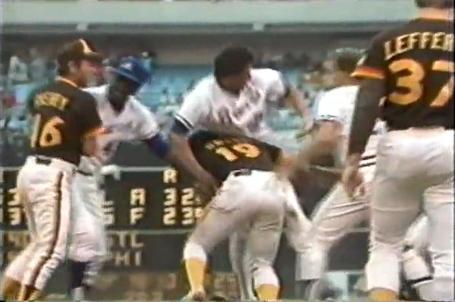
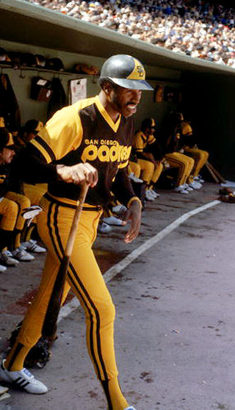
5. 8/12/1984 - San Diego Padres vs. Atlanta Braves vs. the fans
Padres OF Tony Gwynn with a spear to Braves OF Brad Komminsk

Monday, February 21, 2011

The Top 5 HR Hitters Without a Ring

Possibly one of the most common misconceptions about the list of all-time home-run leaders is that they are all World Series winners. Surely if someone were to hit at least 500 home runs, they would have played on at least one championship team in their career, right? However, out of the twenty-five players that hit at least 500 home runs in their career, ten never won a World Series, including the controversial home-run king himself, Barry Bonds of the Pittsburgh Pirates and San Francisco Giants.

Bonds has numbers that are impressive (though sullied by allegations of steroid use during his time with the Giants) even without a championship ring to boost his stats. He played with the Pittsburgh Pirates from 1986-1992 and the San Francisco Giants from 1993-2007. He racked up 762 home runs, 2,935 hits, 1,996 RBI, 514 stolen bases and a .298 career batting average. No one has more home runs in a career or in a season (73), and Bonds is also the leader in career walks (2,558) and intentional walks (688). He has played for fourteen All-Star teams and won seven MVP awards, but being known for a sour attitude towards his fans and the aforementioned investigations of steroid use and perjury in a federal case, many believe that Bonds will never be seen in the Hall of Fame. It is also debated whether his career numbers should have an asterisk due to his alleged steroid use.

Next on the list is Ken Griffey, Jr., a member of the Mariners, Reds and White Sox between 1989 and 2010. The winner of the 1997 AL MVP while a member of the Mariners, Griffey's career included 630 home runs, 2,781 hits and 1,836 RBI. Griffey is seen as one of the greatest natural home run hitters of all time, relying on raw talent and athleticism to reach his numbers and avoiding the temptation of steroid use. The Pennsylvania native played for thirteen All-Star games as well as winning the Gold Glove every year between 1990 and 1999, all spent with the Mariners. Griffey waved goodbye on May 31 of the 2010 season, seen by many as a surefire first ballot Hall of Famer.

The number three spot is held by Sammy Sosa, whose career has also been marred by steroid use, a surly attitude towards the fans at the end of his time with the Cubs, and an infamous moment in 2003 where he was found to be using a corked bat. If moving past these controversies, one sees a career lasting from 1989 to 2007 and amassing 609 home runs, 2,408 hits and 1,667 RBI, though a not overly impressive .271 average. Sosa was the 1998 NL MVP while a member of the Cubs, and played for seven All-Star teams. Sosa's 1998 season grabbed the country by storm, as he and then-Cardinals player Mark McGwire chased Roger Maris' single-season home-run mark of 61. McGwire finished the season with 70 home runs, while Sosa notched 66.

Jim Thome is number four on the list, and is the only player still active. He has been in the league since 1991, debuting with the Cleveland Indians before playing with the Phillies, White Sox, Dodgers and Twins, with which he is currently signed. 589 home runs, 2,216 hits and 1,624 RBI have helped Thome to five All-Star teams, three seasons leading the AL in walks (1997, 1999 and 2002) and leading the NL in home runs (47) in 2003 as a member of the Phillies. He is also tied for first in career walk-off home runs (12) with Jimmie Foxx, Babe Ruth, Mickey Mantle, Stan Musial and Frank Robinson. Thome was one of three players to reach 500 career home runs in the 2007 season, joining Frank Thomas and Alex Rodriguez. Impressively, Thome's 400th homerun had come only three seasons earlier, showing that Thome is not only a powerful hitter, but a consistent one as well.

The fifth-best ring-less home run hitter of all time is a far less contemporary player, Hall of Famer Harmon Killebrew. Killebrew played from 1954 to 1975 with the Washington Senators, Minnesota Twins and Kansas City Royals. While his career batting average of .256 is nothing to put a man into the Hall of Fame, Killebrew played for thirteen All-Star teams, won the 1969 AL MVP award (while a member of the Minnesota Twins) and had his #3 jersey retired by the Twins after amassing 573 career home runs, 2,086 hits and 1,584 RBI. He averaged a home run every fourteen at-bats, and when making his debut on June 23, 1954, Killebrew was the youngest major leaguer at the time, at seventeen years old. The game was a mere six days before his eighteenth birthday. He was elected into the National Baseball Hall of Fame in 1984 with 83% of the vote.

Sunday, February 13, 2011

Supercalifragilisticexpiali-Brosius


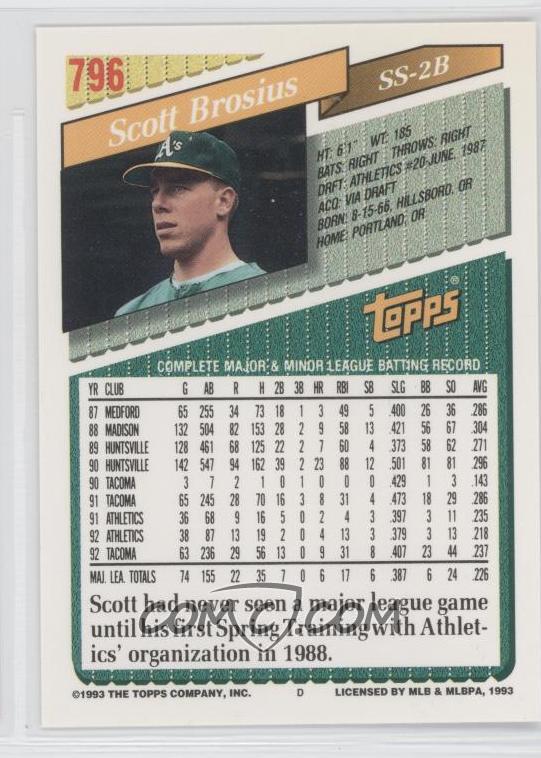
Scott Brosius:
1991-97, Oakland Athletics
1998-01, New York Yankees

World Series MVP. Gold Glove. All-Star. 3-time World Champion. Member of 4 AL Pennant teams. Scott Brosius has earned himself a resume worth bragging about, despite snagging nearly all of his acclaim in a single season, 1998.

Much of Brosius's career has been one of "almosts." He grew up in Milwaukie, Oregon, almost the same spelling as the much-larger Wisconsin city. His last season in the league, spent with the 2001 New York Yankees, was the year they almost beat the Arizona Diamondbacks in the World Series and almost had the first World Series four-peat since achieving the feat in 1936-39. His 1998 season was almost his second 20-home run season, but he finished one short, at 19.

However, even with all the "almosts," his accomplishments cannot be ignored. He hit above .300 twice, in 1996 with the Oakland Athletics and in 1998, with the Yankees. Despite never playing a full 162-game season, Brosius finished with 1,001 hits and 531 RBI, along with 141 home runs. Brosius was also one of just a handful of players to hit a home run in his first major league game, August 7, 1991.

Upon retiring from the MLB in 2002, Brosius became an assistant coach at his alma mater Linfield College, serving under his own coach Scott Carnahan. When Carnahan became the school's Athletic Director in 2007, Brosius was promoted to head coach, a position he currently holds, having amassed a coaching record of 100-38, two Northwest Conference titles and a third-place finish at the 2010 NCAA Division III tournament.

His legacy is one of unfortunately quick-to-fade postseason success, and a Chris Berman-coined nickname, Scott Supercalifragilisticexpiali-Brosius. He never again achieved his staggering 1998 playoff numbers, where he hit .382 (18-47) with four home runs, fifteen RBI and a .406 on-base percentage over thirteen games. His two home runs in Game Three of the 1998 World Series are often seen as the final piece of momentum for the Yankees as they swept the San Diego Padres in four games.

Brosius is certainly not the most well-known Yankee, but his accomplishments cannot be ignored and should not be forgotten.

Thursday, February 10, 2011

An Arachnophobic Juggling Haddock: Remembering Glenallen Hill


Here's a question for you: name your top five World Series-winning power hitters of the last twenty years. Your list would probably look something like this: Albert Pujols, Manny Ramirez, Mark McGwire, Chipper Jones and Jim Edmonds. A name worth considering, however, is Glenallen Hill.

I know. You're wondering who he is. You're wondering how a guy who played for eight teams in thirteen years can possibly be seen as the greatest in anything. Well, truthfully, it's not his numbers that will get him in my book, though a .271 career batting average, 186 home runs, 586 runs batted in, and championship ring (earned with the Yankees after a 2000 trade from the Cubs) are certainly respectable.

It may seem counterintuitive that a guy nicknamed the Juggler and referred to as "akin to watching a gaffed haddock surface for air" in regards to his defensive struggles in the outfield would be able to attract attention from major league teams, especially those that were eventually championship-bound. The retort is found in his career numbers which while not legendary, were still impressive. His .271 average is 8 points higher than that of Mark McGwire and his 2000 season included 27 home runs, 58 RBI and a .297 average despite only playing 104 games. In 13 seasons of play, if extrapolated out to playing a full 162-game season each year, he averaged 26 home runs and 82 RBI/year. To compare, with the same 162-game extrapolation over 17 seasons, Jim Edmonds has averaged 32 home runs and 97 RBI, with a .284 average. While such theoretical statistics do not factor in the possibility of injury, benching or other unforeseen causes for lack of play, the numbers are nothing to sneeze at.

Really, what made Glenallen Hill a fan favorite and certainly one of my favorite players was how staggering his power was, and how eccentric of a player he ended up being. In May 2000, while playing for the Cubs, Hill jacked a moonshot across the street and onto the roof of a five-story residential building topped by bleachers for fans to sit and take in the game from outside the stadium. To date, Hill is the only player to park a ball onto the roof of that building. Whether the location of his home run was intentional or purely by chance remains a mystery, but his power does not. Hill was also the first National League player to serve as a designated hitter in regular season play in June of 1997 against the Texas Rangers, while playing with the San Francisco Giants.

To date, Glenallen Hill might also be the only major leaguer to end up on the 15-day disabled list after a nightmare, though I'll admit, arachnophobic nightmares do sound pretty horrifying. While a member of the Toronto Blue Jays, Hill had a nightmare about being chased by spiders that was so terrifying, he fell out of bed, smashed through a glass table and fell down a flight of stairs...all while asleep. As if the Juggler wasn't enough of a jab, Hill has now also earned the nickname of, you guessed it, Spider-Man.


He'll never end up in the Hall of Fame, and unless you avidly watched some pretty bad 90s baseball, you've probably never heard of him. But those of us who remember the Juggler will never forget his antics, or the raw power and talent he possessed and continues to impart on players as the first-base coach for the Colorado Rockies.